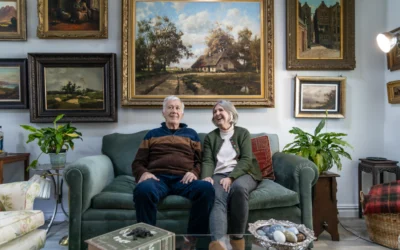
Coral Cove is home to a famous sportsman. Fifty-six years ago, Peter Hatchwell stood at centre at Kings Park and faced the All Blacks, the team from the country that raised him. This spring, as rugby’s greatest rivalry returns to South African soil, he will watch it from the comfort of his own sofa. He has earned the view.
By Adi Gelbart
On Saturday, 22 August 1970, a young centre named Peter Kenneth Hatchwell ran out for Natal against the touring All Blacks at Kings Park in Durban. He had grown up in Christchurch, worn the Canterbury jersey and played for the South Island. Many of the men in black across the halfway line were people he knew. Several were former teammates.
The All Blacks are back in South Africa for their first full tour in three decades. There will be four Tests and a run of provincial fixtures, under a title that, for once, needs no marketing department: Rugby’s Greatest Rivalry. Peter and Shirley Hatchwell will be watching from their maisonette at Coral Cove, which is, by any measure, a considerable improvement on standing at Kings Park waiting for a New Zealand loose forward to arrive.
Peter was born in New Zealand in 1943 and grew up in Christchurch, where sport was simply part of family life. His father was a champion swimmer and water polo player and Peter followed him into the pool, eventually playing water polo for New Zealand himself.
He finished school, trained as a teacher and taught for a living. He is candid about one of the perks: the holidays suited a man who wanted to fit in more than one sporting season. At 18, he was considered very young to be playing provincial rugby. By 1965, he had made the Canterbury side. Rugby was strictly amateur then, so a provincial jersey came with no salary, contract or sponsor.
In 1967, while trialling for a place in the All Blacks, he was injured.
A few years later, Peter emigrated to South Africa. The lifestyle appealed to him, but the real draw was the sporting culture.
Word of his arrival travelled ahead of him. By his account, he was the first New Zealander to play provincial rugby in South Africa and the local game treated the news accordingly. He was collected off the boat and taken straight to lunch at a ‘fancy’ restaurant. He had never eaten anywhere like it. “New Zealand in the 1960s was an extremely rural place,” he says. “I was not accustomed to being met at the dockside and treated like a visiting dignitary”
Peter settled in Durban, where he played club rugby for Berea Rovers, now College Rovers and was later made a life member. In 1969, he was selected to play centre and wing for Natal.
The 1970 All Blacks were the best-prepared side New Zealand had ever sent to South Africa. On 22 August, they arrived in Durban.
The Natal team that faced them was captained by Tommy Bedford, an Oxford man, Springbok and one of the most independent-minded figures in South African rugby. The side included two New Zealanders. Terry Mehrtens, formerly of Canterbury and the Junior All Blacks, was at fullback, while Peter was centre.
For Peter, it must have been a strange afternoon, lining up against former teammates from New Zealand. He was, quite literally, caught in the middle of the rivalry.
Bedford welcomed the tourists to what he called “the last outpost of the British Empire”, a phrase Natalians had used about themselves for generations, half in pride and half in mischief. In 1970, it also carried a sharper edge, reminding the New Zealand audience that South Africa was not a country with one view of itself. Bedford was already an outspoken critic of apartheid and of the men running South African rugby. As Peter remembers it, that remark helped bring his Springbok career to an end.
In 1972, Peter left South Africa for Swaziland and moved into the hotel business, running ‘The Tavern’ in Mbabane for eight years. His hotel catered for King Sobhuza II, one of Africa’s great monarchs and Peter had the use of the King’s army to make deliveries to the royal palaces. “Those were interesting times,” he says.
When the hotel was sold, Peter returned to New Zealand.
There he met Shirley. They married and at the time Shirley was personal assistant to the chief executive of Air New Zealand, which came with the kind of travel privileges that are now the stuff of legend. After several successful years, they decided to return to South Africa.

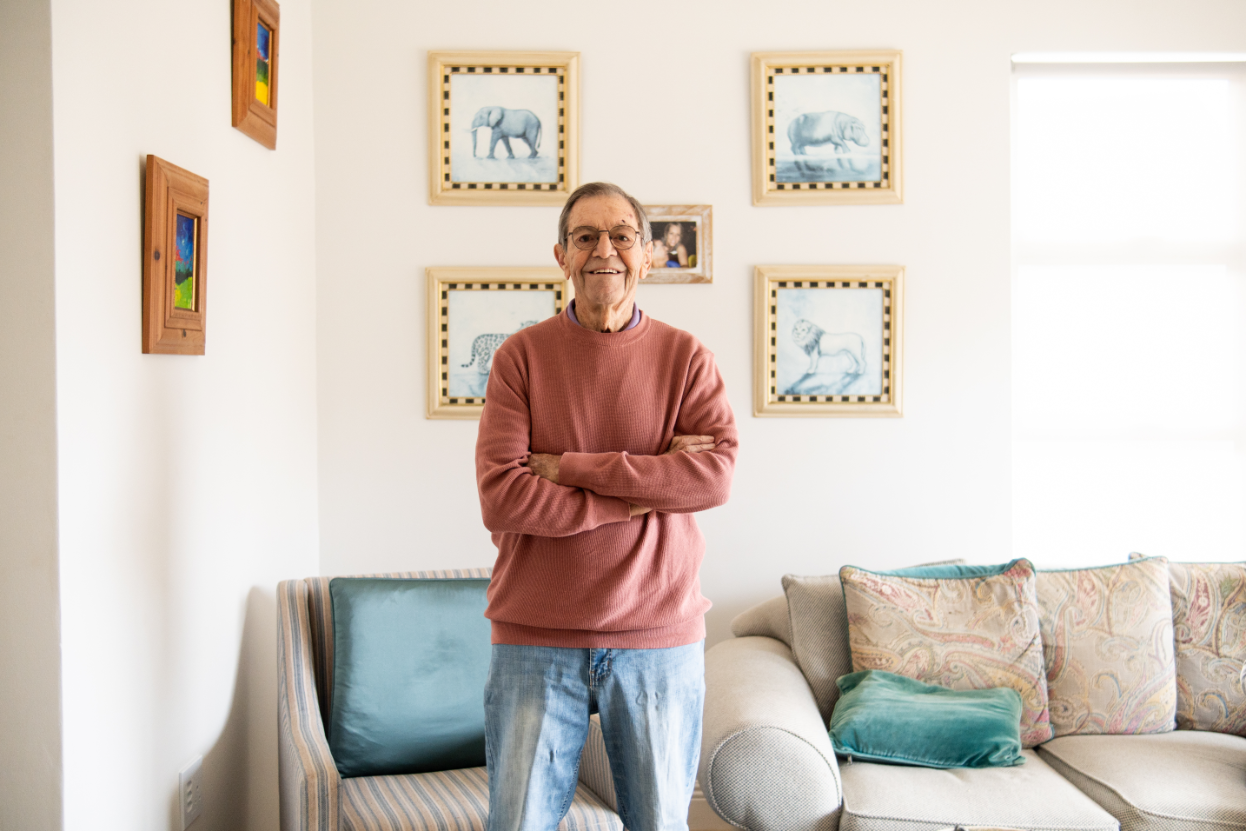
It was 1994. South Africa had been readmitted to international sport and was preparing to host the Rugby World Cup. Their timing could hardly have been better. Between Peter’s rugby connections and Shirley’s experience in travel, they had the makings of a business.
Touchdown Travel was born. Peter was the “front man”, bringing three decades of rugby connections on both sides of the Indian Ocean, while Shirley handled the “nuts and bolts”. They partnered with the Natal Rugby Union, taking Springbok supporters to World Cups in Wales, England and France, handling the South African arrangements for All Blacks tours. It worked both ways, too. They once brought 40 lawn bowlers to South Africa and built a successful general travel business alongside the sport.
Peter watched the industry change around them. Sports travel grew, and so did the prices, until, as he puts it, “things got rather out of hand”. But he is unsentimental about what the business taught him. Sport, he believes, has a way of levelling cultures and bringing people together. He has the experience to make the claim.
He has been the outsider met off a boat, the New Zealander in a Natal jersey and the Kiwi selling Springbok tours. None of it ever required him to choose sides.
Peter’s ancestry is bound up with the sea, with people who went where the water took them and he suspects it never really left the bloodline. Christchurch, Durban, Mbabane, back to New Zealand, Australia, Durban. His life has followed something of the same route.
He and Shirley have lived in several estates along the North Coast over the years. They became friends with Penny Rae and when Coral Cove came up, were among the first couples to put down a deposit. They have settled into their maisonette and, after all the travelling, seem very happy to stay put.
Which brings us back to that sofa.
This year’s series is the first full All Blacks tour of South Africa in three decades: four Tests and a run of provincial matches of exactly the kind Peter played in. When the two sides meet, he will have no jersey to pull on, no flight to catch and no hotel to organise.
Just a comfortable seat, a lifetime of rugby memories and a rather more relaxed view of the rivalry than he had in 1970.
This time, Peter gets to watch from the comfort of his home – in Coral Cove.
By Adi Gelbart
Share on Facebook