Some names are given. Some are taken away. Some become a form of survival, but they all seem to whisper across decades, revealing themselves slowly over time.
Miriam. From ancient Hebrew: The one meaning of the name rises to the top of the list- “wished-for child.”
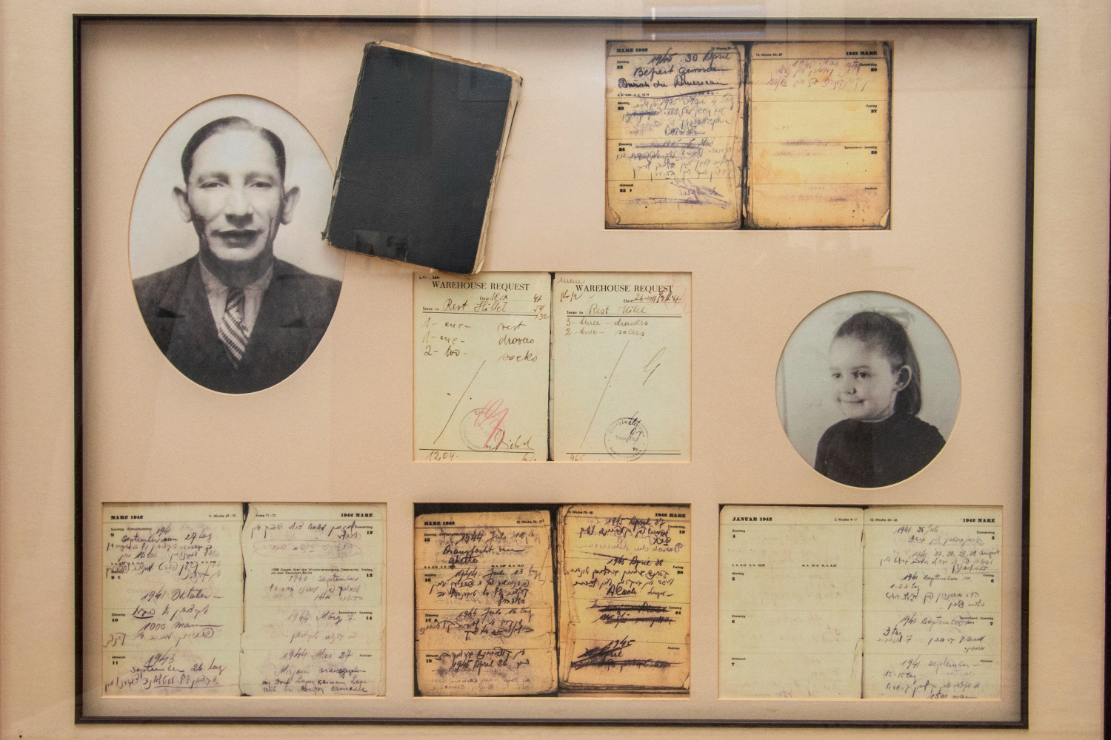
Miriams birth was extraordinary. She arrived at 6:30 on the morning of 3 September 1941, blonde-haired and blue-eyed, in a candlelit room inside the Kovna Ghetto in Lithuania. Her mother, Dora, had hidden her pregnancy entirely because in the ghetto, pregnancy for Jewish women was punishable by death.
The candle was still burning when two soldiers forced their way in. In a room holding its breath, one lifted the newborn child and said simply: “She is pretty.”
Then he put her down and left.
It was the first miracle of Miriam.
Her parents, Dora and Hillel Rest, understood what lay ahead. Jewish lives were closing in on all sides. Survival was becoming an impossible calculation. Hillel made a decision no parent should ever have to make: he found a Lithuanian couple outside the ghetto, childless and desperate for a child of their own.
And he let his daughter go.
Miriam was two years old.
She became Nijola.
In Lithuanian, Nijola loosely translates to the little successful one; a child destined to flourish. Baptised into a new family, she entered another life entirely. The dangerous traces of her Jewish identity disappeared beneath blonde curls, blue eyes and a language that quickly became her own.
For four years, Nijola thrived.
When Miriam spoke about those years, there was no bitterness in her voice. Only honesty. She had been deeply loved. She spoke perfect Lithuanian. She was spirited, clever and adored by the couple who raised her as their daughter.
Two names. Two lives. Both true.
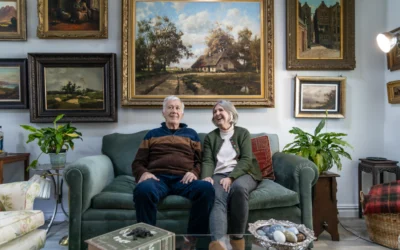
When I met Miriam at Melrose Manor, I found myself momentarily disarmed by her glamour. At eighty-four, she is elegant in a way that has little to do with effort and everything to do with presence. Sharp. Funny. Entirely herself.
“What’s your secret?” I asked.
“Cigarettes and Diet Coke,” she replied instantly. “I don’t like vegetables. I don’t like exercise. But I never miss my two-hour sleep.”
She seemed faintly amused by my expectation that there might be a grander formula. We continue with her account of her early years…
By then, the war had already taken almost everything from her father. Hillel had somehow survived the liquidation of the ghetto, the camps and the machinery built to erase Jewish lives from Europe. Dora did not survive. Neither did Miriam’s older sister, Henya.
Before Dora died, she made Hillel promise her one thing: find Miriam.
And he did.
When he came for her, Nijola was six years old. He arrived as an extremely thin and broken stranger claiming to be her father. After a week of discussions Hillel finally convinced Nijola’s Lithuanian foster parents that his daughter belonged with him. She left the only home she remembered for a world shaped by displacement, uncertainty and grief: trains, bomb shelters, weeks in the same clothes, and beside her, a man carrying unbearable loss.
She did not speak to him for six weeks.
Then one day, after some small childhood outburst, Hillel broke down.
And Nijola, the 6 year old little girl from Lithuania, recognized the fragility of the adult beside her. She instinctively understood that she had to apologize. Her survival depended on it.
She went to him
“Papa, I am sorry.”
In many ways, that was the moment Nijola became Miriam again.
Their bond became the foundation for everything that followed.
In 1948, Miriam and Hillel arrived in South Africa. She was seven years old. They settled first in Brakpan with Dora’s sister before later moving to Edenvale, where Hillel rebuilt his life as a partner in a wood factory.
During her school years, Miriam was rebellious, sharp-minded and instinctively resistant to authority. She was arrested at one anti-apartheid protest and very nearly married someone Hillel strongly disapproved of.
Miriam and Hillel’s relationship, forged through survival and loss, was close enough to withstand both defiance and disappointment.
Then Miriam met Nathan Lazarus. She was twenty years old. They married, and for the first time in many years, Miriam noticed how happy it also made her father.
Miriam and Nathan built a life in Hyde Park that was stable, privileged and full of family. Three sons, David, Michael and Graeme, grew up in that home, and for a time, the restlessness that had shaped so much of Miriam’s early life seemed to quieten.

Miriam as Nijola
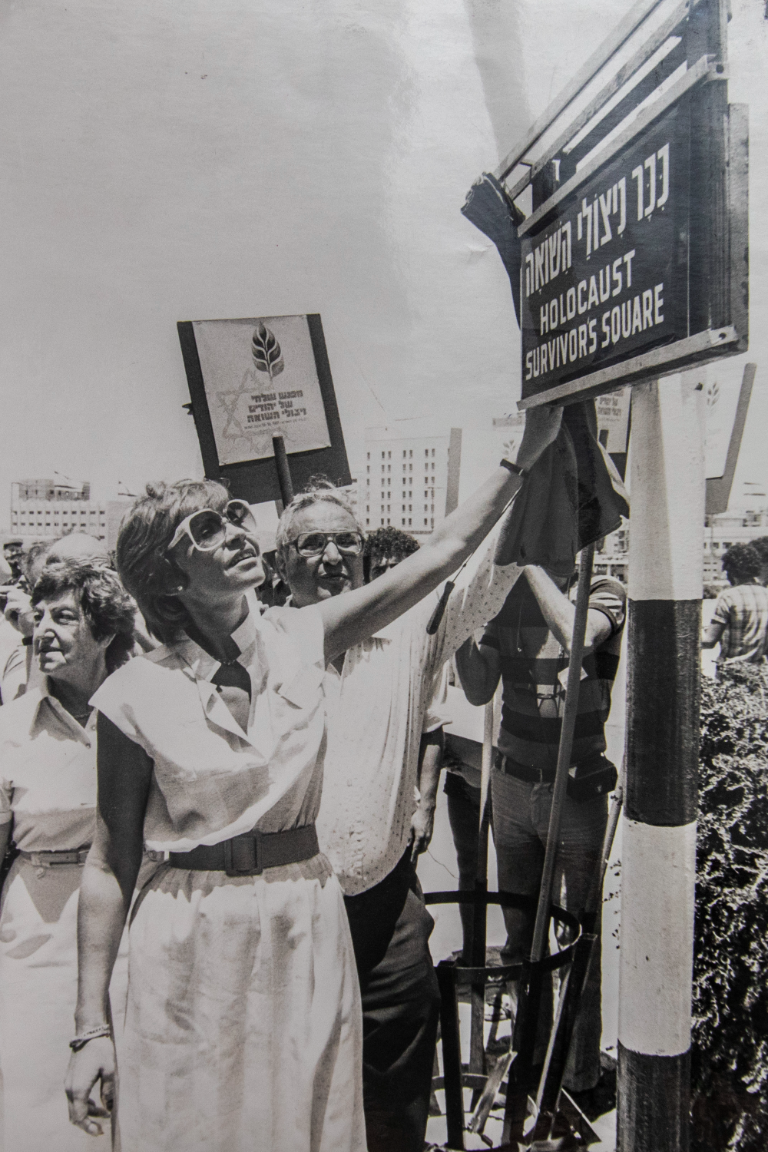
Miriam in Israel involved in the World Gathering of Holocaust Survivors
But as the boys grew older, something unsettled began to return. To Nathan and Hillel, it was difficult to understand why Miriam could not simply be content with the life she had built, which after all was comfortable and one in which she did not need to work. But Miriam felt increasingly aware of a part of herself still left unexplored. A need not only to do more, but to become more fully herself.
The search for meaning became impossible to ignore. And Miriam, as she had done before, understood that growth would once again require her to step beyond the life that had been carefully built around her.
After Hillel fell ill and passed away, Miriam took over the family business. By then, her three sons were grown, and she ran the company with skill, intelligence and authority. Alongside this, she became deeply involved in charitable work, particularly within the Jewish community and Holocaust remembrance initiatives.
In the 1980s, Miriam made another life-altering decision: she left South Africa and moved to Israel. To her, the move felt less like reinvention than evolution ; a return to something essential within herself. There, she worked at Yad Vashem, Israel’s Holocaust memorial and museum, and became involved in the World Gathering of Holocaust Survivors.
As one of the last Lithuanian Holocaust survivors from South Africa, Miriam gave talks around the world. Standing before audiences, she carried the names of those who no longer could: Dora. Henya. The people of the Kovna Ghetto.
She still does.
Today, she speaks with enormous pride about her three sons, three daughters-in-law and ten grandchildren. And always, woven through every story, is Hillel , the father who found her, brought her home, and taught her what it meant to endure with humanity intact.
“You have to be a mensch,” she says simply.
There is an extraordinary resilience in Miriam Lazarus, but sitting with her, what struck me most was something more precise than resilience. She is warm without sentimentality. Honest without self-pity. Independent in a way that feels deeply hard-won.
And now, at Melrose Manor, she is entering another chapter.
Miriam Lazarus is a remarkable woman who had to become many things before she could finally become herself.
By Adi Gelbart
Share on Facebook